


Seven-step design process by DT HUB
We added two extra stages – starting the project and implementing the solution – to Stanford’s five-element design thinking model (Stanford d.school).
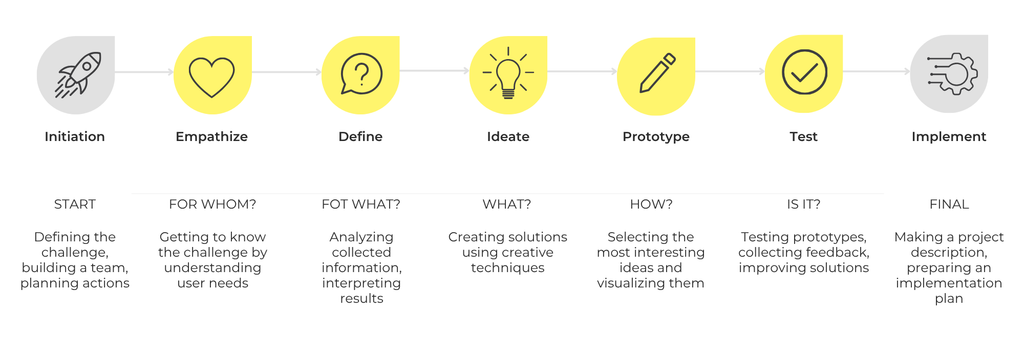
Design process – what happens during each step?
- PROJECT INITIATION – defining the challenge (identifying the framework and project constraints) and entering the process, building the team and organizing its work, setting the conditions for conducting workshops (design sessions) and creating a schedule, understanding the project goal and reviewing knowledge (analysis of the challenge context, stakeholder mapping), identifying information gaps and developing a research plan
- EMPATHY – getting to know the challenge through careful observation and understanding of user needs (collecting data, immersing in knowledge, organizing information, modeling based on research results)
- DEFINING THE PROBLEM – determining the essence of the problem from the users’ perspective and establishing key assumptions for the solutions being designed (synthesis and preparation of the problem definition for further work)
- IDEATION – creating as many potential solutions as possible for a defined problem using creative techniques (brainstorming ideas, organizing, clustering/grouping, selecting, evaluating and choosing ideas for prototyping, preparing idea cards)
- PROTOTYPING AND TESTING – visualizing ideas (giving ideas a physical form to assess different aspects of the designed solutions), presenting prototypes (getting feedback from stakeholders), modifying selected concepts (improving the developed solutions) and preparing the final version of the designed solution
- IMPLEMENTATION OF SOLUTIONS – synthesizing the team’s work results, describing the designed solutions, preparing an implementation plan and recommendations, creating project documentation and closing the process