

ZPU 2
[ZPU2] Nowa jakość – nowe możliwości. Zintegrowany program rozwoju uczelni – project funded by the EU under the European Social Fund (Operational Programme ”Wiedza. Edukacja. Rozwój” POWR.03.05.00-00-Z221/18-00)

Project implementation period: 02.09.2019 – 31.12.2023
Project goal:
The main goal of the project was to improve the skills of people participating in higher education, meeting the needs of the economy, labor market and society, as well as to support organizational changes and enhance the competences of staff in the higher education system by implementing, by 31.12.2023, an integrated development program responding to the diagnosed development issues of the University in the context of the necessity to adapt it to the requirements of the new PoSW law (The Law on Higher Education and Science), enabling dynamic progress of the university in key areas of activity.
DT HUB Center activities:
As a result of the ZPU2 project, among others, DT WORKSHOP, DT TOOLS, DT PROJECT TEAM and DT FACILITATION workshops were designed and tested multiple times, manuals dedicated to the mentioned workshops were created and the DTthon event was organized.
Each edition of DTthon involved four companies (like 3M, HP, Olympus, Schaeffler, Qiagen, Whirlpool, Cognizant, CCC, BD, Credit Agricole, Credit Suisse, EY, Mondelez, Sikla, AXA, Mazda, ZUS), four facilitators, and around 60 students. The event was sponsored by ABSL (Association of Business Services Leaders). As part of the ZPU2 project, the creation of the DT HUB lab was also funded.
See what the first six editions of DTthon looked like and how this event creates value for participants::
INNOLAB 2.0
[INNOLAB 2.0] “Laboratorium innowacyjnych kompetencji dydaktycznych INNOLAB 2.0 – program doskonalenia kompetencji pracowników dydaktycznych i doktorantów Uniwersytetu Ekonomicznego we Wrocławiu” – project funded by the European Union under the European Funds for Social Development Programme (FERS.01.05-IP.08-0123/23-00)

Project implementation period: 01.03.2024 – 30.06.2025
Project goal:
The main goal of the project was to improve the skills and/or qualifications of the teaching staff at the WUEB and PhD students from the WUEB Doctoral School. The project assumptions helped to enhance the WUEB’s teaching potential, especially in terms of the needs of Gen Z and Alpha students.
DT HUB Center activities:
The result of implementing the INNOLAB 2.0 project includes, among other things, the design and execution of workshops aimed at enhancing the competencies of the WUEB educators in the area of Design Thinking methodology.
The workshops consisted of two parts – group sessions (20 hours) and individual sessions (4 hours).
During the first part, participants:
- Learned what Design Thinking is, its origins, where it can be applied, how work based on this approach is carried out and the stages it consists of
- Were immersed in the DT process and experienced what user-centered design entails
- Faced a specific challenge and went through the entire design process, from empathy and problem definition, through idea generation, to prototyping and testing
- Got hands-on experience with the principles, techniques and key tools used at the various stages.
The second part of the training (individual) was dedicated to helping participants come up with the best ways to use DT in their classes (taking into account the specifics of these classes and the needs of Generation Z and Alpha).
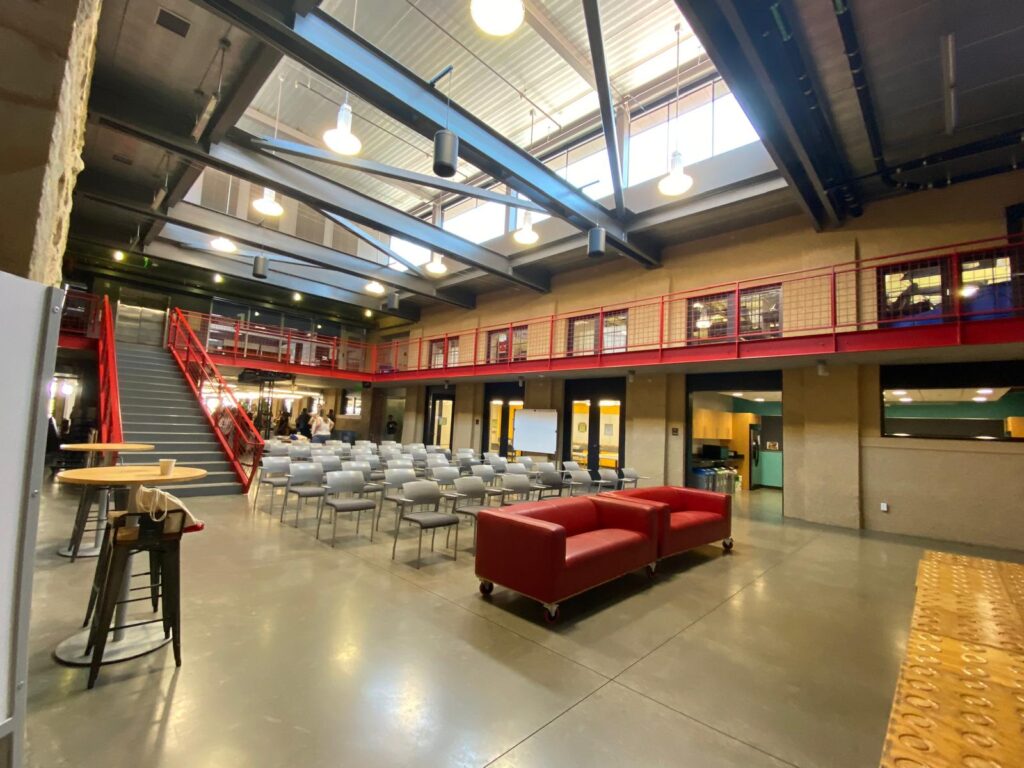
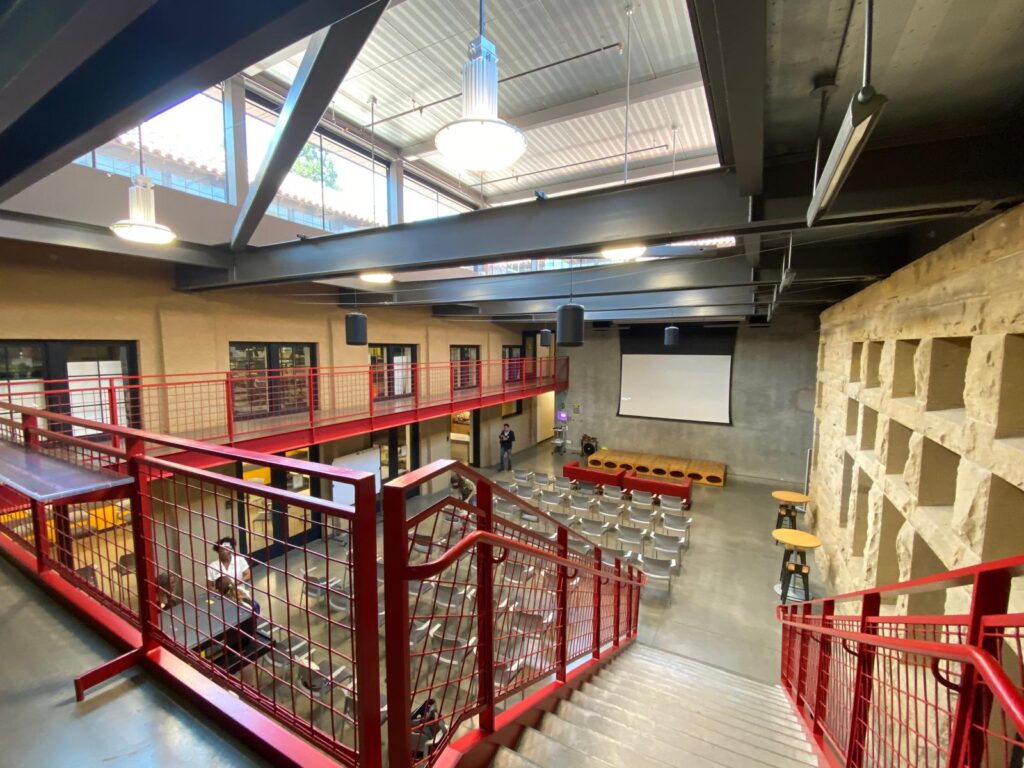
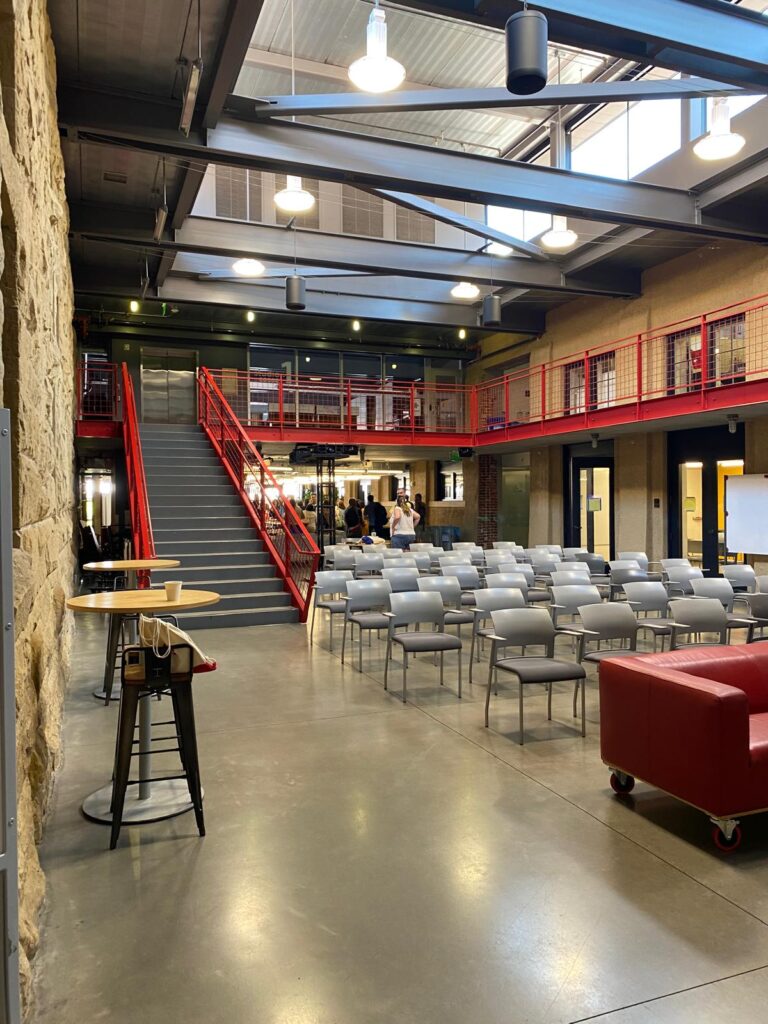
Additionally, for five employees of the WUEB, a trip was designed and carried out to the HASSO PLATTNER INSTITUTE OF DESIGN, STANFORD UNIVERSITY, USA – a study visit combined with an intensive development program, the Teaching and Learning Studio.
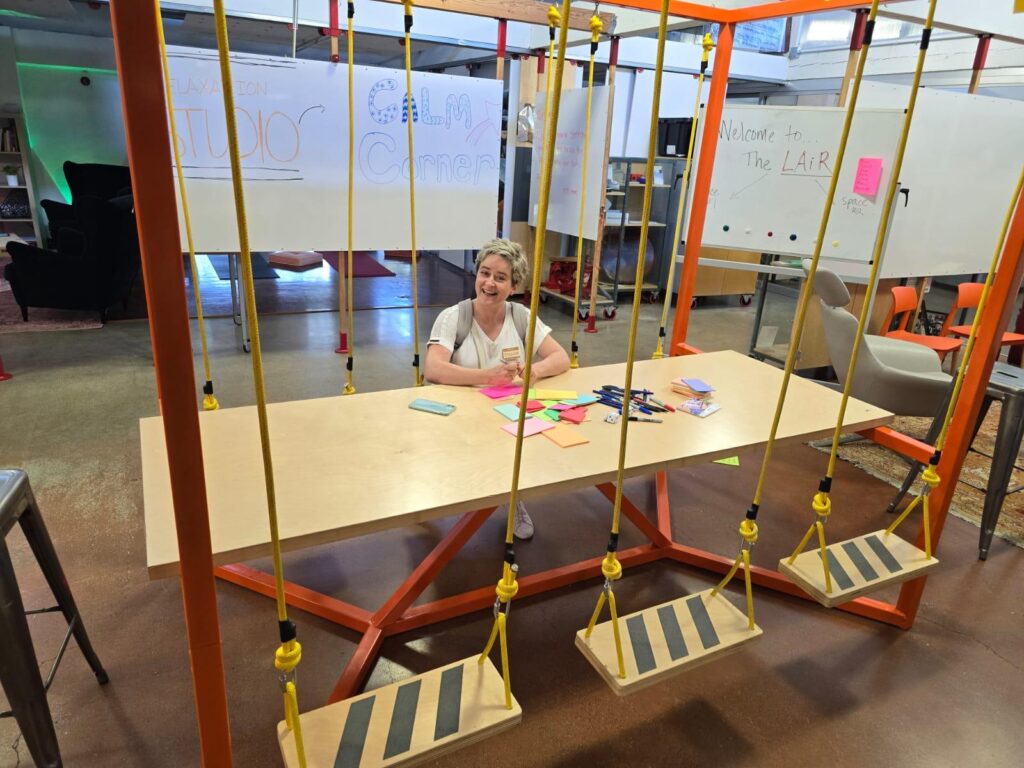
Check out the photo gallery from the trip to the HASSO PLATTNER INSTITUTE OF DESIGN, STANFORD UNIVERSITY, USA

GAMEHEARTS
[GAMEHEARTS] Games, Heritage, Arts, & Sport: the economic, social, and cultural value of the European video game ecosystem – three-year research project funded by the EU– HORIZON-CL2-2023-HERITAGE-01-06 (grant agreement 101132543).
The project is being carried out in an international consortium consisting of leading universities and industry partners, including: University of Salford (UK), Breda University of Applied Sciences (Netherlands), Tampereen korkeakoulusaatio sr (Finland), Wroclaw University of Economics and Business (Poland), University of Vienna (Austria), City Football Group (UK), London Symphony Orchestra (UK), Imperial War Museum in London (UK) and Ubisoft (France).


GAMEHEARTS has received funding from European Union’s Horizon Europe Research and Innovation programme under Grant Agreement No. 101132543.
Project implementation period: 2024 – 2026
Project goal:
The project aims to maximize the value of the European video game industry ecosystem (EVGIE) within the broader social context of the creative and cultural industries (CCI).
In particular, the project looks at the role of EVGIE in contributing to:
- Growth
- Job creation
- Physical and mental well-being
- Social and cultural cohesion
focusing on how stronger and closer connections between more traditional and emerging CCIs can be used to create more inclusive and socially responsible cultural experiences.
DT HUB Center activities:
As a result of the GAMEHEARTS project, four three-day Design Thinking marathons – GH DTthons – were designed and carried out, including one with an international reach. The marathons brought together representatives from the video game industry ecosystem and other culture and creative sectors, facing the challenge: How can the video game industry ecosystem [EVGIE] collaborate better with the culture and creative sector [CCI] to benefit both sides?
GH DTthons took place on the following dates and in the following cities:
📍 Wroclaw (Wroclaw University of Economics and Business, DT HUB Center) – 21-23 February 2025
📍 Warsaw (Center for the Development of Creative Industries) – 7-9 March 2025
📍 Katowice (Rawa.Ink, under the patronage of the City of Katowice) – 21-23 March 2025
📍 International Final – Wroclaw (Wroclaw University of Economics and Business, DT HUB Center) – 9-11 April 2025
During each edition of GH DTthon, participants exchanged experiences and built cross-sector bridges. Using Design Thinking tools, they analyzed how different creative industries can collaborate effectively.
The goal was to:
- Understand the existing practices and inter-industry relationships (diagnosis – how things are)
- Identify ways to shape future collaboration (creation – how things should be)
- Prepare strategic recommendations and best support practices for both [a] national and [b] EU decision-makers.
See what the individual editions of GH DTthon looked like
K(A)FE
[K(A)FE] Program Rozwoju Kompetencji Osób Dorosłych K(A)FE – project funded by the European Union under the European Funds for Social Development Programme (FERS.01.05-IP.08-0485/23-00)

Project implementation period: 01.09.2024 – 30.08.2029
Project goal:
The main goal of the project is to support the idea of lifelong learning by developing modern and innovative training programs, delivered in short support formats (short educational forms – K(A)FE), through which 960 adults (aged 18–64) will improve their skills according to labor market needs, which will be confirmed with a micro-credential.
The project is being carried out in partnership with Lower Silesian Employers.
The project addresses strategic socio-economic needs in the development of future skills, with a particular focus on lifelong learning. Aimed at people aged 18–64 – both professionally active and inactive – the project provides a comprehensive concept of short educational forms, based on modern teaching methods, a hybrid learning model, (video) podcasts and the innovative DT Innovathon workshop (GET DIGITAL – GO GREEN – BE SOCIAL).
The development programs of the Specialist, Manager, and Leader Academy, as well as the Growth Lab Academy, inQUBE, and Language paths, have been designed to be inclusive and flexible, taking into account the needs of people with special educational requirements.
The project is a pilot form of implementing micro-credentials for the WUEB.
Activities of the DT HUB Center:
We’ve completed conceptual work in terms of methodology as well as the verification and validation of learning outcomes (taking into account neurodidactics and universal design), developed programs and educational activities, and prepared educational tools and materials in collaboration with the project partner. Coming up next are participant recruitment and educational activities.
You can find more information about the project in the “Dobrze Trafione – K(A)FE“
Take a behind-the-scenes look at the K(A)FE project and check out the report from the conceptual workshops: